Why AI Skills Matter for Students
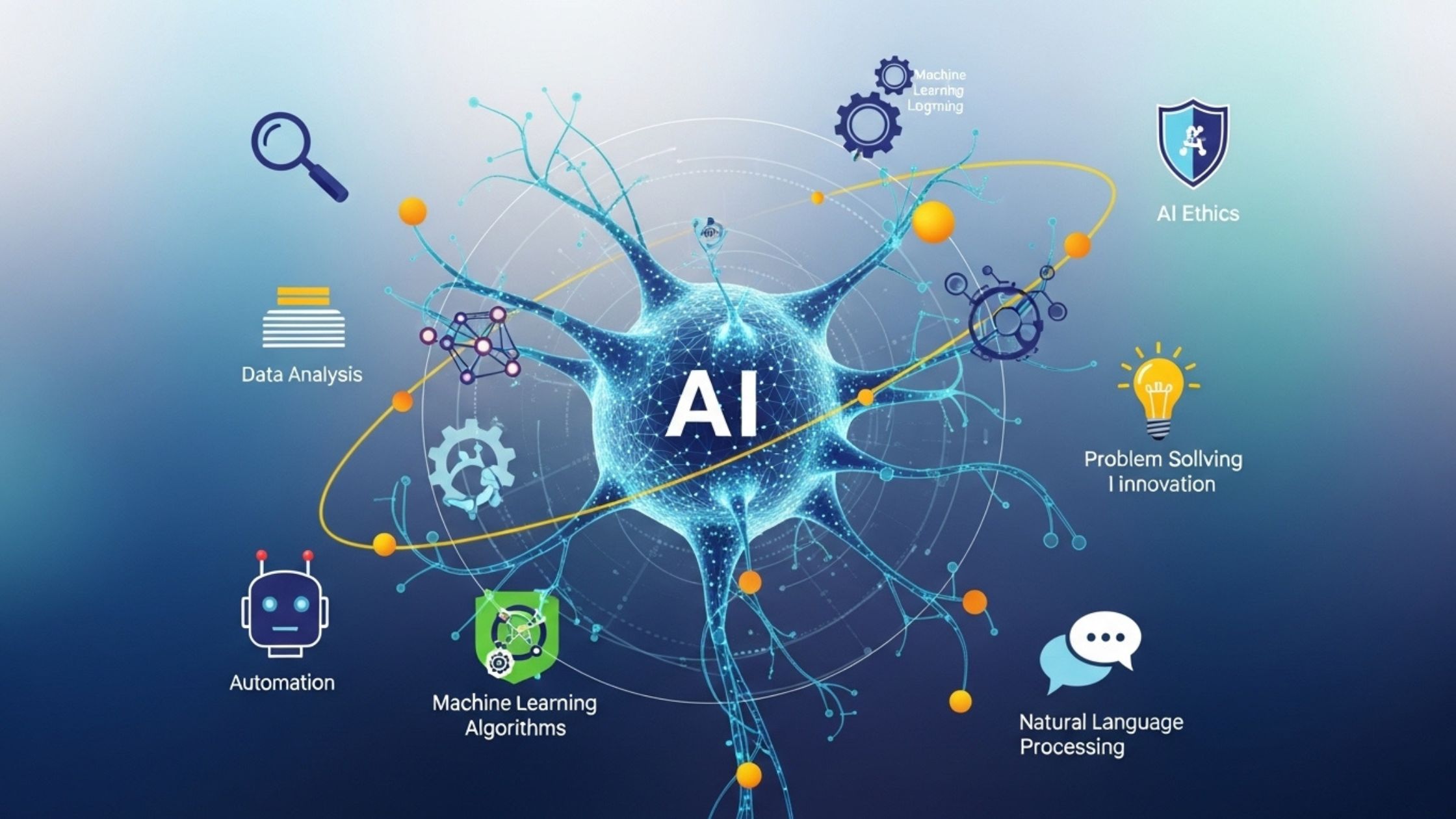
I observe artificial intelligence all over. Artificial intelligence (AI) refers to computers that learn based on data and assist individuals in decision-making. AI is already used in many apps we use. Video recommendations, voice assistants, and smart search tools utilize AI.
When I discuss this technology with students, I find most are interested in learning more. They want to understand how it operates and how it will influence future employment. According to reports from the World Economic Forum, many jobs will require basic AI knowledge. Students who learn AI early become faster learners and improve their projects, while some use services like take my online class for me when coursework feels overwhelming.
Read More: What Is AI for Students? Tools, Guidelines, and Real Academic Applications
Core AI Skills for Non-Technical Students
Not all students desire to study computer science. No problem. In my opinion, all students will be able to master the simplest skills of AI without having to write complicated code.
Basic AI competencies assist students in getting familiar with the functionality of AI. The skills also enable them to utilize technology in a responsible manner. I frequently explain to newcomers that AI is like learning to take advantage of a powerful calculator. You need not even construct the calculator to be able to use it properly.
These essential skills simplify and quicken learning. They also assist students in remaining secure when using AI tools on the internet.
AI Literacy
The concept of AI literacy is the conceptual capacity to grasp the meaning of AI and its functionality in everyday life. I always put it in terms of learning a new language. Studying this language, students know what AI can and cannot do.
As an example, AI is able to process vast volumes of information in a short period of time. However, AI is not a human way of thinking. It is unable to experience feelings or to comprehend the circumstances as people do.
There are also other times that students approach academic support tools or services like an online class taker when they need assistance in using digital learning systems. The knowledge of AI can enable them to be wise and cautious when using such services.
Prompt Writing Basics
Another quality skill is prompt writing. One of the inputs is the command that we give to an AI. The answer is that the more the instruction is.
I enjoy using prompts as questions to ask a teacher. Should the question be straightforward, the teacher may provide a useful explanation. When the question is not clear, then the answer will not be clear either.
To illustrate, rather than asking the child to write about space, a more appropriate prompt would be to ask the child to explain how astronauts can live in the International Space Station. The second prompt is more explicit and yields better results.
Technical AI Skills for Advanced Learners
Other students are enthusiastic about technology and would like to learn more about AI. I like to see that inquisitiveness. These students will be able to begin acquiring basic technical skills that drive AI systems.
Technical AI skills entail data work and simple computer programs. Initially, these concepts can be complicated. But once they are explained step by step, they can be easily understood.
Students who venture into technical AI skills tend to find new career interests. They could turn into data analysts, software developers, or AI researchers in the future.
Data Analysis Tools
Information that computers learn is data. AI systems are trained based on data. Data analysis is a valuable skill, which is why.
I tend to illustrate information using a basic example. Consider a list of test scores of a whole class. A computer is able to analyze and discover patterns. It can indicate what students are aware of and what issues require additional work.
Simple tools like spreadsheets can be used to help students begin learning the art of data analysis. Excel programs, such as Microsoft Excel and Google sheets are useful to arrange numbers and draw some charts.
Structured learning platforms, like online class help, are also used by some learners when they begin to play with new digital tools. Learning can be facilitated through guidance.
Introductory Machine Learning Concepts
Machine learning is a vital aspect of AI, where computers are trained to recognize data patterns. I put it in simple terms: I ask a computer to learn to recognize cats by displaying a large number of labelled pictures. With practice, it learns to recognize them.
Learners can build simple AI models, which are trained on images, sounds, or poses, using easy-to-use systems like Teachable Machine. With the help of trial and error, students can be taught about the mechanisms of how AI systems work and will most likely be interested in learning more about technology.
Human Skills AI Cannot Replace
AI is powerful, but it cannot replace human thinking and creativity. I often remind students that technology works best when people guide it.
Human skills are still the most valuable abilities in the workplace. AI tools support these skills, but they cannot fully copy them.
Students who combine AI knowledge with strong human abilities will stand out in future careers.
Critical Thinking
Critical thinking refers to the critical approach to accepting information as true. In my opinion, this ability will gain significance in the era of AI.
In some cases, AI tools may provide erroneous or partial responses. Critical thinking makes students question the truth before believing the outcome.
To illustrate, I am trying to get students to compare information sources. Such a habit can enable them to prevent errors and misunderstandings.
Creativity
Creativity is something I truly admire in students. Creativity means producing new ideas, stories, designs, or solutions.
AI can generate images, text, and music. However, the original ideas still come from people. Humans imagine possibilities that machines cannot fully understand.
Creative students often build strong portfolios of artwork, writing, or digital projects. These portfolios can become valuable assets when they apply for future jobs.
Ethical Judgment
Ethical judgment means understanding what is right and wrong when using technology. I believe this skill is essential when working with AI.
AI systems sometimes use large amounts of personal data. Students must understand why privacy matters and how information should be protected.
Ethical thinking also helps students avoid misuse of technology. For example, copying AI-generated work without understanding it can harm learning.
Responsible learners focus on using AI as a support tool. Many students also explore structured learning guidance from online class help services when they want ethical academic support and mentoring.
How Students Can Build AI Skills
A great number of students question me about the way they can begin to learn AI. The positive aspect of it is that learning opportunities abound today.
Students do not have to spend money on very costly equipment and higher education levels. All they require is curiosity, practice and the desire to learn new tools.
There are two basic learning paths that I would normally suggest.
Courses and Certifications
One of the simplest methods to learn AI is through online courses. Numerous websites have introductory tutorials that target young students.
Several websites, such as Coursera and Khan Academy, offer structured computer
science and AI foundations courses.
Such courses may feature videos, quizzes and small projects. Lessons that are done in a step-by-step manner enable the students to learn new concepts without feeling overwhelmed.
Course learning is also complemented with a structured academic support, such as the best online class help program used by some students when they need additional guidance in challenging subjects.
Hands-On Practice
Practice is the best way to learn AI skills. I always encourage students to experiment with tools and build small projects.
For example, students can create simple chatbots, design AI-generated art, or analyze small data sets. Each project teaches something new.
I have noticed that students remember lessons better when they build things themselves. Projects turn theory into real experience.
School clubs, coding communities, and online forums also help students learn together. Collaboration makes learning more fun and motivating.
Career Advantages of AI Knowledge
AI skills are not only useful in school. They also open many career opportunities.
Employers today look for people who understand modern technology. Even basic AI knowledge can give students a strong advantage when they enter the job market.
Internships
Internships enable students to have actual work experience. Numerous technology firms provide data-related internships in data analysis, automation, and AI tools.
Those students who are already familiar with the basics of AI are usually the most notable when it comes to applications to internship. Employers regard them as eager learners who are capable of adapting quickly.
Other skills obtained by students during internships include teamwork, communication, and professional skills.
Such experiences can make them comprehend the application of AI in real industries.
Job Readiness
The students are also equipped with AI knowledge that prepares them to work in the future. The AI tools are currently utilized in various industries to enhance productivity and decision-making.
Data and intelligent systems are used in healthcare, marketing, finance, education, and entertainment. Employees with knowledge of AI can cope with these changes more readily.
Conclusion
The world is rapidly being transformed by AI. To be able to use AI, students are not required to be master programmers. Sufficient curiosity and fundamental abilities. Being AI literate, writing quickly, analyzing data, and machine learning make numerous opportunities. Students who integrate technology with creativity, critical thinking and ethics train themselves to have successful future careers.